14 Month Old Hits Mom
read •
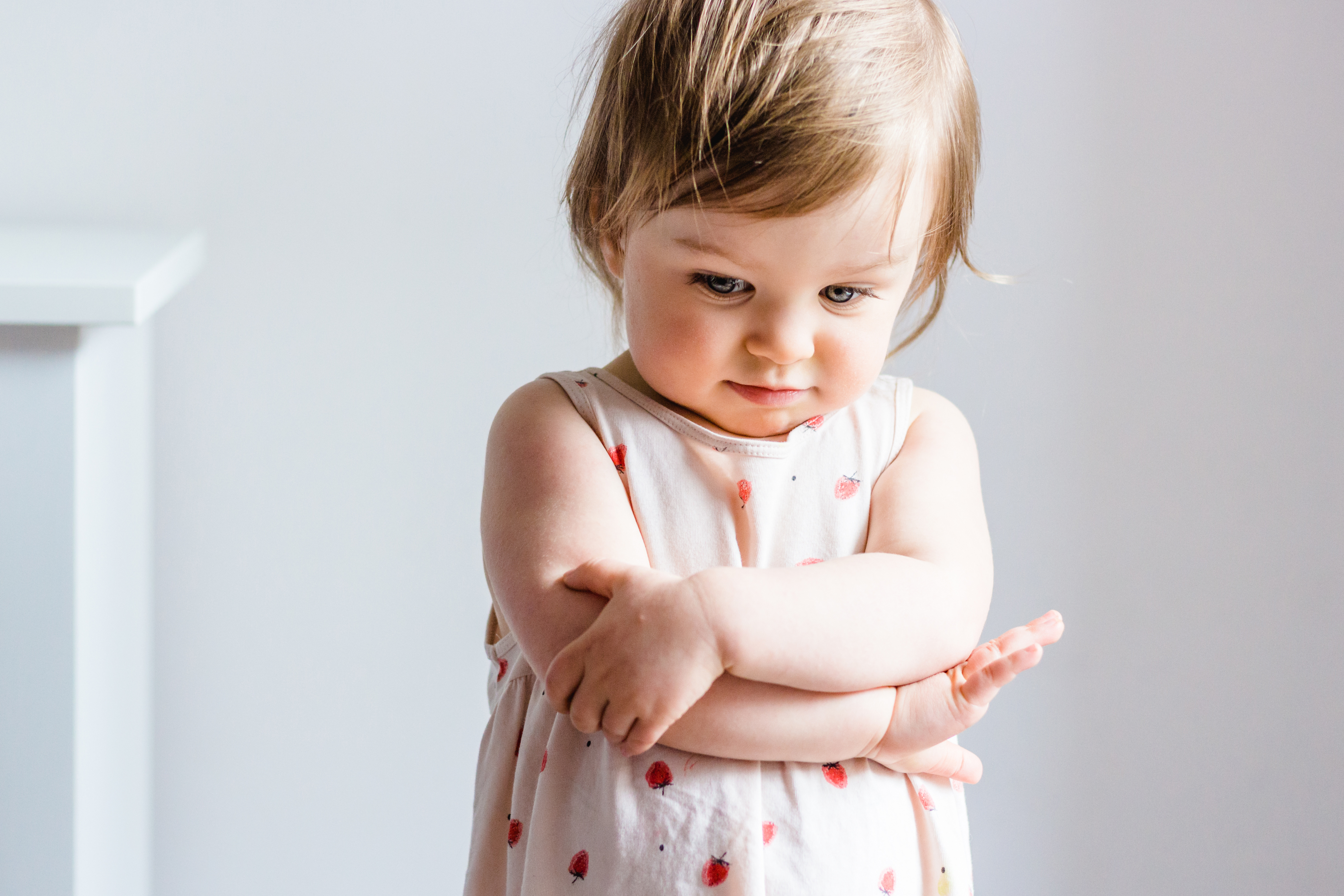
I have a wonderful, beautiful 14 month old girl that has just recently begun hitting and slapping me (her mommy) in the face when she gets upset. I have consistently taken her hand and firmly said, "We don't hit our mommy" or "No hitting mommy" but she still continues to do this. Its worse if she wants something that she can't have or I take something away from her that is potentially harmful however we go through this behavior a couple times a day or more if she's not feeling well i. e. teething. Many times when I tell her not to hit me, she starts crying and her face just crumples up and I feel awful so I hold her and tell her its ok. I'm a first time mommy and I wonder if I'm doing the right thing. Some advice would be greatly appreciated.
Thanks,
Abbie
Dear Abbie,
You are doing exactly the right thing: Stopping the hitting immediately, and telling your daughter that you won't let her hit you -- but doing it in a kind way, and not "disciplining" her. Hitting is not something that should ever be permitted, and you do not want to model a relationship where hitting is ever okay, no matter what feelings your little one has. So you stop her immediately and firmly. On the other hand, she is hitting you not because she is bad, or mean, but because she is little and has big feelings that she needs your help to handle. Her hitting is a cry for your help.
Babies are sensitive people. They have to handle an overload of intense feelings in the course of their days, from pain (teething) to disappointment (which can feel like the end of the world to them). Their brain and nervous systems aren't developed enough to manage these feelings gracefully, thus they often resort to more primitive methods of expression.
You may have noticed that underneath all feelings of human anger are more vulnerable feelings: hurt, fear, pain. All of these make us feel powerless (so imagine how they make a baby feel!) Humans find these feelings so hard to tolerate that we defend against them by feeling anger instead. Babies are no exception. When they feel pain, hurt, or fear, babies get angry, just like the rest of us.
At 14 months, your baby responds to these angry feelings (and the underlying disappointment or pain) by hitting you. When you use “gentle guidance” to say that we don't hit, and her face crumples, that's a great sign. It means that you've gotten past the anger to the feelings beneath it. Feeling and expressing those deeper “bad” feelings is what she needs at that moment, to get to the source of her “acting out” behavior. (That's what “acting out” means: instead of feeling our emotions, we “act them out.”)
When your daughter then cries and you hold her, she is expressing those “yucky” feelings in the safety of your arms and your love. She's learning that she can't always have everything she wants (like that dangerous object you just took from her) but she can have something even more important— someone who adores her, and accepts all of her, including those “negative” feelings. That unconditional love is the greatest gift any child can receive, and the foundation of all emotional health.
If, instead, you responded with anger, your daughter would never get to those deeper feelings. Instead, she would stay angry, or possibly (to keep your anger in check) begin smiling at you while she hit you (which is another defense against the painful feelings.) Either way, her hitting would be more likely to continue.
So is there a way to prevent your daughter's hitting to begin with? Many parents find that when they stop the hitting firmly, and really mean it, the baby stops hitting. When they are ambivalent, wondering if they should not hurt the baby's feelings, the hitting continues because the limit is not clear. Other parents find that when they "punish" or retaliate, the hitting continues, but probably for a different reason, which is that the little one is angry.
So it is entirely possible that you can prevent more hitting by responding with firm kindness. You can also probably move her through this phase faster by giving her words for her feelings so she won't have to act them out. She doesn't have to be able to say them, she just has to hear that you are understanding her.
Since she understands the message “We don't hit,” she is ready to begin comprehending messages like “You are so sad; you wanted that.” Follow that empathy with the limit, just as you are doing: “You can be as mad as you want, but I won't let you hit me.” Give her a chance to express her feelings by crying, offering her comfort and empathy: “You feel so sad and mad.”
It's perfectly ok for her to cry about her disappointment, as long as you're offering her comfort. Sometimes crying is exactly what we need. Distracting her from her feelings to stop her from crying sets up a pattern that could be destructive in later life, such as using food, shopping or alcohol to avoid feelings.
Instead, you create safety with your empathy. That allows her to really feel those feelings. The amazing thing about human emotion is that once we allow ourselves to feel them, they dissipate. So the disappointment, sadness and powerlessness go away, once she feels safe enough to feel them. Then she doesn't need to get mad as a way to defend against those more vulnerable feelings, and the anger melts away, too.
So once your daughter has “shown you” her upset, let her know that her that her happiness matters to you, even though you can't say yes. That's how our kids learn that we love them, even though we frustrate them with limits. “Let's find a way to feel better. Should we dance to some music? Look out the window? Turn on the faucet and put our hands in the water?”
So the sequence is:
- Set a limit (“We don't hit”)
- Offer empathy and acceptance of her feelings (“You are disappointed”)
- Let her discharge her feelings by crying with your comfort.
- Help her explore ways to shift her mood.
If you can do that, you are giving your daughter a foundation of emotional health for life.
Blessings,
Dr. Laura Markham